One genus of plants has existed virtually unchanged on earth since long before the dinosaurs. For gardeners seeking something a little unusual equisetum or horsetails offer a glimpse into a lost world.
Instantly recognisable, equisetum or horsetail is a prehistoric perennial plant which offers a fascinating glimpse into the evolutionary history of plants. Most of us would be able to find it in our garden and while some gardeners see it as a simple invasive weed, others are aware of its historic significance.
It produces a dense clump of growth and deep rhizomes, it is unwanted by many gardeners and needs regular management to control its spread.
As one of the oldest surviving plant genera, they link modern ecosystems to ancient worlds once dominated by towering forests of tree-sized horsetails.
Their persistence through millions of years of climate change, extinction events, and environmental upheaval is a testament to their adaptability and resilience.
Though often overlooked or dismissed as weeds, horsetails are botanical marvels. With their unique structure, ecological importance, and ancient origins, they continue to intrigue scientists, ecologists, and plant enthusiasts alike.
The genus Equisetum, commonly referred to as horsetails, represents one of the most ancient lineages of vascular plants still alive today. With their distinctive jointed stems and brush-like appearance, horsetails are botanical survivors — living relics of an ancient past. They are the only living genus in the class Equisetopsida, which once included a vast diversity of species that dominated prehistoric landscapes.
Although often viewed as a weed, horsetail does have an unusual beauty and is of interest as a ‘living fossil’, belonging to a group of plants that predate dinosaurs. Since ancient times people have used horsetail in herbal remedies to treat a range of ailments. It is also used to make an organic liquid fertiliser, with some claims that it has antifungal properties.
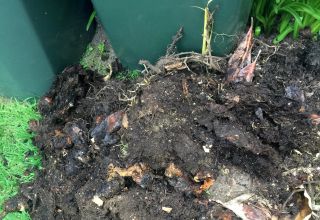
Horsetail has two distinct types of growth. The first type appears in early to mid-spring; these early shoots are curious-looking, light tawny brown, about 30cm tall, and easily mistaken for toadstools. Like other early plants horsetail reproduces by spores, and it is these early shoots that have spore-bearing cones (strobili) at their tips.
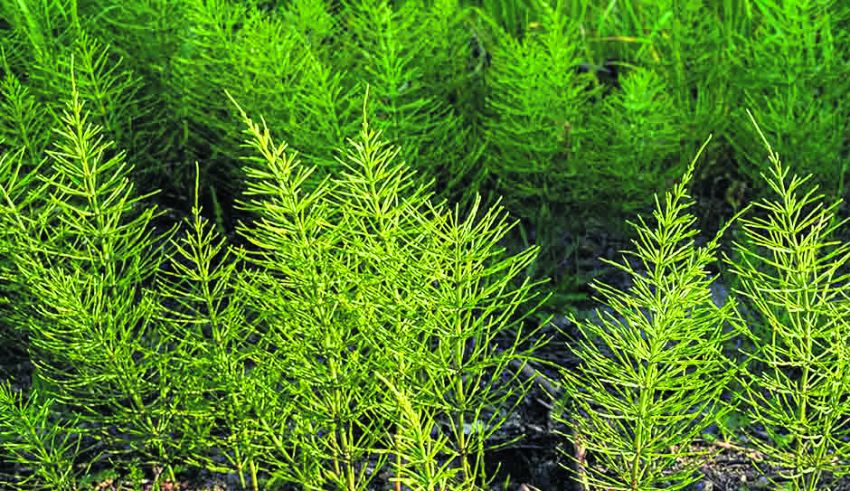
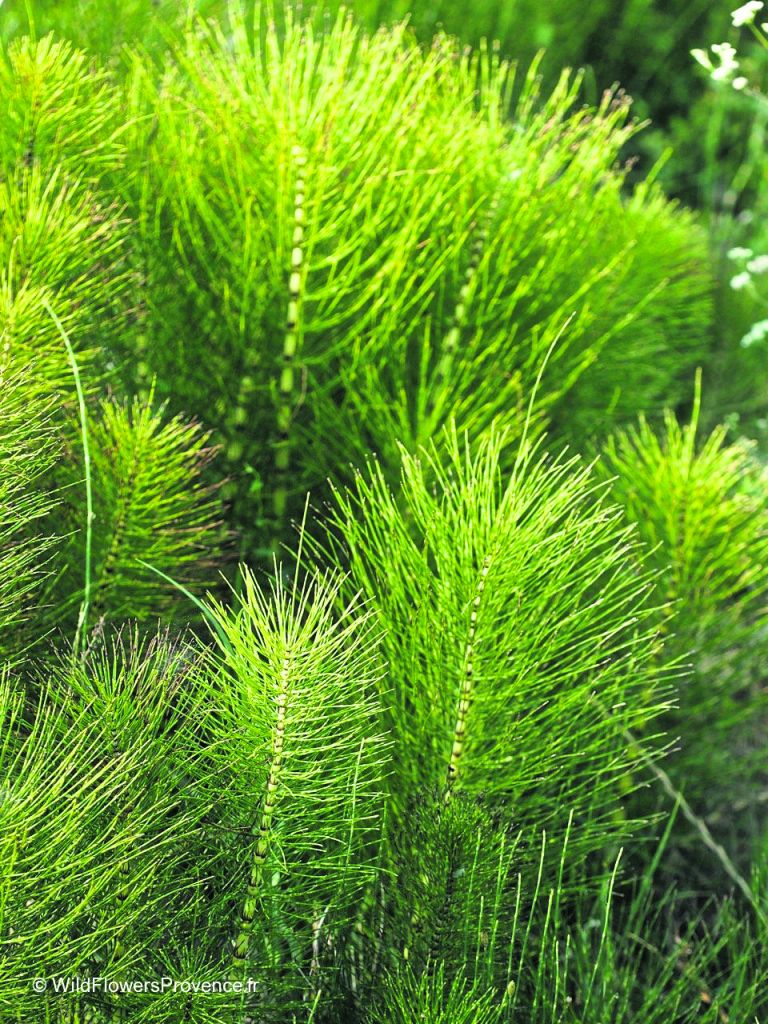
The second type of growth appears in late spring and grows throughout the summer. These shoots are green, reaching about 60cm in height, and en masse resemble a miniature conifer forest. The stems grow in segments, producing dense whorls of needle-like branches. They die back in autumn, leaving a system of dark rhizomes and tubers underground, ready to produce new shoots again in spring.
Horsetails have an evolutionary lineage that dates back more than 350 million years, to the Late Devonian period. They flourished particularly about 359 to 299 million years ago a time when Earth’s atmosphere was rich in oxygen and swamplands were common. During this era, the ancestors of equisetum — belonging to the larger group known as sphenophytes — grew into towering trees, some reaching up to 30 metres. These ancient plants formed dense forests and contributed significantly to the formation of modern-day coal deposits.
Unlike many plant groups that have undergone extensive radiation and diversification, Equisetum has remained relatively unchanged in form over hundreds of millions of years.
However, the smaller, more adaptable ancestors of modern Equisetum survived and eventually evolved into the species we recognize today.
Equisetum species are vascular plants, meaning they have specialized tissues (xylem and phloem) for transporting water and nutrients. They reproduce not through seeds but by spores, like ferns and other pteridophytes.
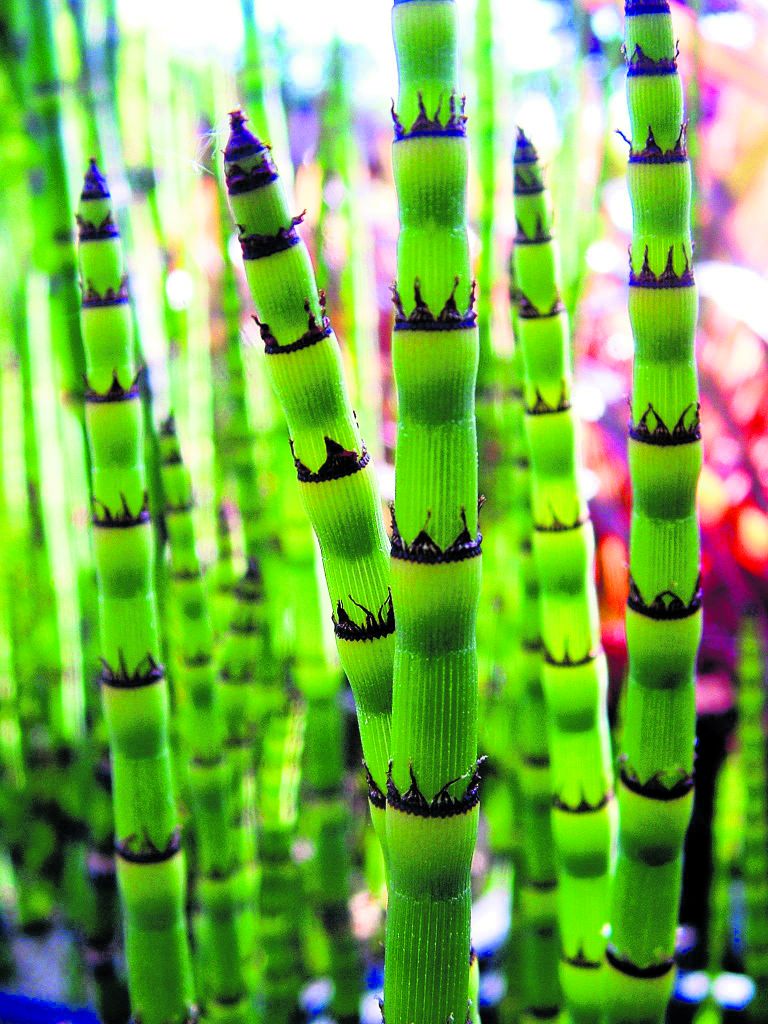
The high silica content in their tissues also made horsetails useful to early humans for scouring pots and polishing metal — hence the nickname “scouring rush.”
Despite the ancient history of the genus, only about 15 to 20 species exist today. These are broadly classified into two groups: the subgenus Equisetum (also known as ‘true horsetails’) and subgenus Hippochaete (commonly known as ‘scouring rushes’). The key difference lies in the appearance and behaviour of their stems.
It isn’t necessary to get rid of horsetail. When growing among trees, shrubs, or vigorous herbaceous perennials, horsetail won’t cause any significant competition and its presence in parts of the garden increases biodiversity and provides shelter and food for several invertebrates.
Many gardens contain horsetail, and it doesn’t necessarily make a garden less attractive or an allotment less productive, so long as its spread is managed. For example, some areas of RHS Garden Wisley contain horsetail. It is managed by hand pulling all the green stems in June, with a second weeding session in late summer to remove regrowth. This approach controls the horsetail enough for other plants to grow and produce an impressive display of flowers.
However, as its green stems can form dense ground cover from late spring to autumn, it is a good idea to control the growth of horsetail in parts of your garden where it might smother and outcompete seedlings, or smaller and less vigorous plants.
Horsetails often play a significant role in wetland ecosystems, helping to stabilize soil and filter water. Their rhizomes help prevent erosion along riverbanks and wetlands, and they provide habitat for small aquatic creatures.
However, some species, particularly E. arvense, are known to be invasive. Once established, their rhizomes can make them difficult to remove, leading to their classification as problematic weeds in some agricultural areas.
In traditional medicine, especially in Europe and Asia, horsetail extracts have been used for their diuretic and wound-healing properties.
However, the plant’s high levels of certain alkaloids mean that excessive consumption can be toxic.