Starting a career in horticulture in your later years is realistic and rewarding. It requires commitment, practical training and a willingness to keep learning, but offers a rare combination of meaningful work, physical activity, and connection with the natural world. Organisations such as the Working for Gardeners Association provide a clear pathway into the profession through practical training, mentoring, and networking, accessible and in demand.
Changing careers is no longer unusual.
For those ready to exchange routine for purpose and office walls for open skies, horticulture offers not simply a new job, but a fulfilling new way of life.
Many people reach a point where they want work that is more meaningful, more connected to nature, and offers a healthier balance between physical activity and mental wellbeing. Horticulture has become an increasingly attractive option for those seeking a fresh start later in life. Whether motivated by a lifelong passion for gardening, redundancy, retirement from a previous profession, or simply the desire to work outdoors, horticulture offers a rewarding and achievable second career.
Starting a career in horticulture at a more mature age brings many advantages. While younger entrants may have physical energy, mature career changers often possess valuable life skills such as communication, organisation, problem-solving, customer service, and reliability. These qualities are highly valued by employers, private garden owners, and clients.
The first step is understanding that professional horticulture is much more than gardening as a hobby. It requires practical skills, plant knowledge, and a willingness to learn continuously. Professional gardeners need to understand soils, plant identification, pruning techniques, propagation, pests and diseases, seasonal maintenance, biodiversity, and sustainable gardening practices. Fortunately, these skills can be learned through a combination of training and hands-on experience.
For many people, beginning with formal education provides an excellent foundation. The Royal Horticultural Society offers respected qualifications ranging from introductory courses to advanced diplomas. Colleges across the UK also provide practical horticulture courses, while online learning allows students to study theory at their own pace. However, classroom learning alone cannot replace practical experience. Spending time working in real gardens is essential for developing confidence and competence.
Volunteering is one of the most effective ways to gain experience. Organisations such as the National Trust, English Heritage, community gardens, and local parks often welcome volunteers. These opportunities expose newcomers to a wide range of gardening tasks while allowing them to work alongside experienced horticulturists. Volunteering also helps build professional networks that may lead to future employment.
One of the most valuable opportunities available to career changers in the UK is the work of the Working for Gardeners Association (WFGA). Originally founded in 1899 as the Women’s Farm and Garden Association, the charity has evolved to support anyone interested in developing practical horticultural skills and pursuing a professional career. Its mission remains centred on promoting horticultural education, practical training, and career development through hands-on experience rather than purely classroom-based learning.
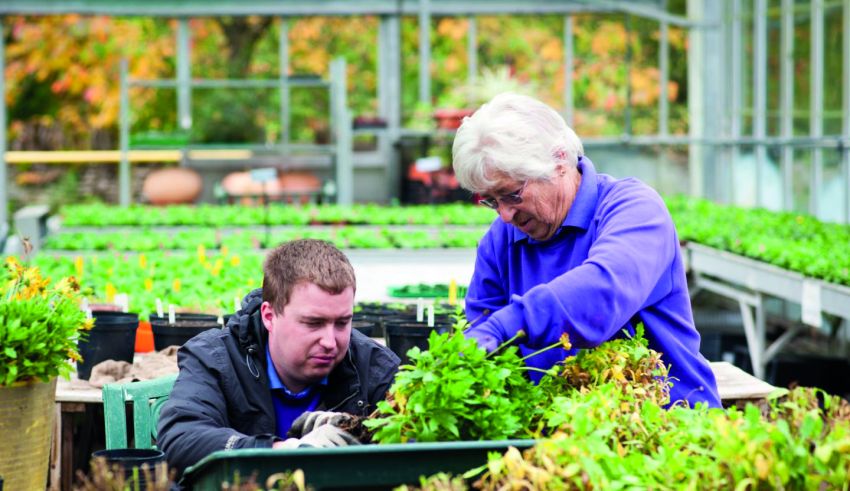
A cornerstone of the organisation’s work is the Work and Retrain as a Gardener Scheme (WRAGS). Established specifically to support adults changing careers, the scheme provides paid, part-time placements in carefully selected private and public gardens under the supervision of experienced gardeners or garden owners. Trainees typically work between 12 and 14 hours each week over the course of a year, developing practical skills through seasonal tasks and regular mentoring. The programme has helped hundreds of people move successfully into professional horticulture, with graduates progressing into roles such as head gardeners, nursery staff, self-employed gardeners, and horticultural educators.
Beyond WRAGS, WFGA membership offers workshops, skills days, garden visits, newsletters, networking opportunities, and access to educational funding through initiatives such as the Christine Ladley Fund. These resources create a supportive community where members can continue developing their knowledge throughout their careers. The organisation demonstrates that learning horticulture is not limited by age but strengthened through practical experience and shared expertise.
Physical fitness is naturally an important consideration for anyone entering horticulture later in life. Gardening can involve lifting, digging, kneeling, climbing ladders, and working in all weather conditions. However, modern horticulture increasingly places emphasis on safe working practices, ergonomic tools, and sensible task management. Many mature entrants find that their fitness improves significantly after spending regular time working outdoors. Good physical preparation, appropriate clothing, and attention to health and safety all contribute to a long and enjoyable career.
Technology also plays an increasing role in horticulture. Gardeners may use digital garden plans, plant identification apps, irrigation systems, weather monitoring, and social media to promote their businesses. Those changing careers often bring transferable digital skills from previous professions, providing an additional advantage when managing projects or running their own gardening businesses.
‘Many successful head gardeners and self-employed horticulturists began their careers in their forties, fifties, or even later.’
Financial expectations should also be considered realistically. Entry-level horticultural salaries may initially be lower than those in some previous professions. However, experience and specialist knowledge often lead to higher earnings. Many professional gardeners eventually establish successful self-employed businesses offering garden maintenance, planting design, consultancy, specialist pruning, or kitchen garden management. Others move into public gardens, botanical collections, garden centres, education, or commercial landscaping.
One of the greatest rewards of horticulture is the sense of purpose it provides. Unlike many office-based roles, the results of a gardener’s work are visible every day. Watching plants establish, flowers bloom, wildlife flourish, and gardens evolve through the seasons creates immense professional satisfaction. Every day brings different challenges, from propagating seedlings in spring to pruning fruit trees in winter, ensuring that the work remains varied and engaging.
There are also significant benefits for mental wellbeing. Numerous studies have shown that spending time in nature reduces stress, improves mood, and promotes physical health. Professional gardeners often describe their work as deeply satisfying because it combines creativity, practical skill, problem-solving, and continual learning. Rather than producing reports or attending endless meetings, they leave work having transformed a living landscape.
Mature entrants frequently discover that age is an asset rather than a disadvantage. Employers value reliability, commitment, and life experience. Clients often appreciate gardeners who communicate well, understand customer expectations, and demonstrate professionalism. Many successful head gardeners and self-employed horticulturists began their careers in their forties, fifties, or even later.