Rambling roses possess a kind of enchantment that few other garden plants can rival. They do not merely grow; they wander, climb, tumble, and cascade with a generosity that feels almost poetic.
In early summer, when their long pliant stems are smothered in clouds of bloom, rambling roses transform walls, arches, pergolas, and old trees into living tapestries of colour and perfume. To grow rambling roses is to invite romance into the garden — a romance deeply rooted in English horticultural tradition and celebrated throughout literature, art, and memory.
Unlike the more formal hybrid tea or floribunda roses, ramblers have an untamed grace. Their beauty lies partly in their freedom. They are not stiff or regimented plants but exuberant climbers that seem to possess a life and spirit of their own. Their long canes sweep through hedgerows, scramble into branches, and soften hard structures with a profusion of flowers. Many gardeners feel that no rose captures the spirit of an old cottage garden more perfectly than a rambling rose in full bloom over a doorway or trailing through an apple tree.
The importance of rambling roses in garden design cannot be overstated. They bring vertical beauty into spaces where borders alone would never suffice. A single mature rambler can clothe an unsightly shed, cover a bare wall, or transform a plain pergola into a fragrant summer retreat. Their ability to soften architecture is one of their greatest gifts. Stone, brick, and timber become gentler beneath cascades of flowers and foliage. Even in smaller gardens, a well-chosen rambler can create height, depth, and atmosphere without taking up much ground space.
There is also something profoundly nostalgic about these roses. They evoke old rectory gardens, village lanes, and forgotten manor houses where roses climbed unchecked around windows and chimneys. Many classic ramblers date back more than a century and carry with them a sense of continuity with generations of gardeners before us. To plant one is to participate in a living tradition.
Literature has long recognised the symbolic power and beauty of roses, especially climbing and rambling forms.
Roses appear throughout Shakespeare’s works as symbols of love, secrecy, and beauty. In A Midsummer Night’s Dream, Shakespeare writes of “the wild thyme blows, where oxlips and the nodding violet grows,” conjuring the same luxuriant abundance associated with rambling roses in an English garden. Later poets and novelists continued this association between roses and romance. Vita Sackville-West, herself a passionate gardener, frequently wrote about climbing roses with reverence, understanding how they blur the boundary between garden and wilderness.
“Most flower once, but when they do, the display is unforgettable. In June and July, they erupt into huge trusses of flowers, often so numerous that the foliage nearly disappears beneath them.”
Bees flock to the simpler varieties, filling the garden with movement and sound. Many produce attractive hips in autumn, extending their season of interest and providing food for birds.

Another reason ramblers are among the best roses to grow is their resilience. Many are vigorous, hardy, and surprisingly tolerant of poor conditions. They can thrive where more delicate roses struggle, scrambling through trees or along north-facing walls with remarkable determination. Once established, they require comparatively little attention beyond occasional pruning to control their size. For gardeners seeking beauty without excessive fuss, ramblers are ideal companions.
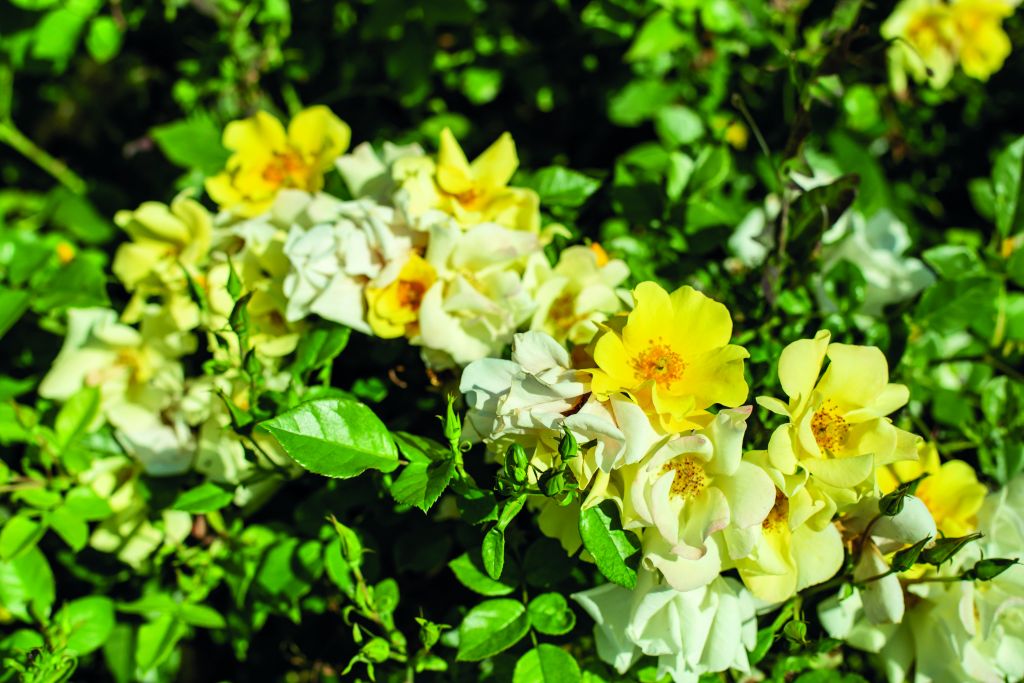
Among the classic varieties, few can rival the legendary Rambling Rector. This magnificent rambler produces huge sprays of creamy white semi-double flowers with golden stamens and a rich musky scent. It has a wonderfully natural appearance, looking especially beautiful weaving through mature trees or sprawling over old walls. After flowering, it bears masses of orange-red hips that remain attractive well into autumn.
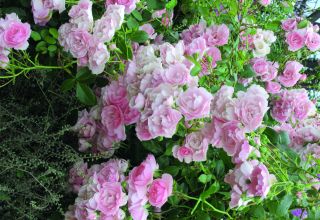
Equally beloved is Albertine, often regarded as one of the finest pink rambling roses ever introduced. Its coppery-pink buds open into richly scented double blooms with shades of salmon and blush. The fragrance alone is enough to secure its place in any garden, but its vigorous growth and elegant arching habit make it unforgettable.
For pure romance, Paul’s Himalayan Musk is incomparable. This enormous rambler can ascend into the crowns of trees, producing waterfalls of pale pink flowers that resemble drifting clouds. In full flower it creates one of the most spectacular sights in horticulture, though it requires space and a certain willingness to let nature take the lead.
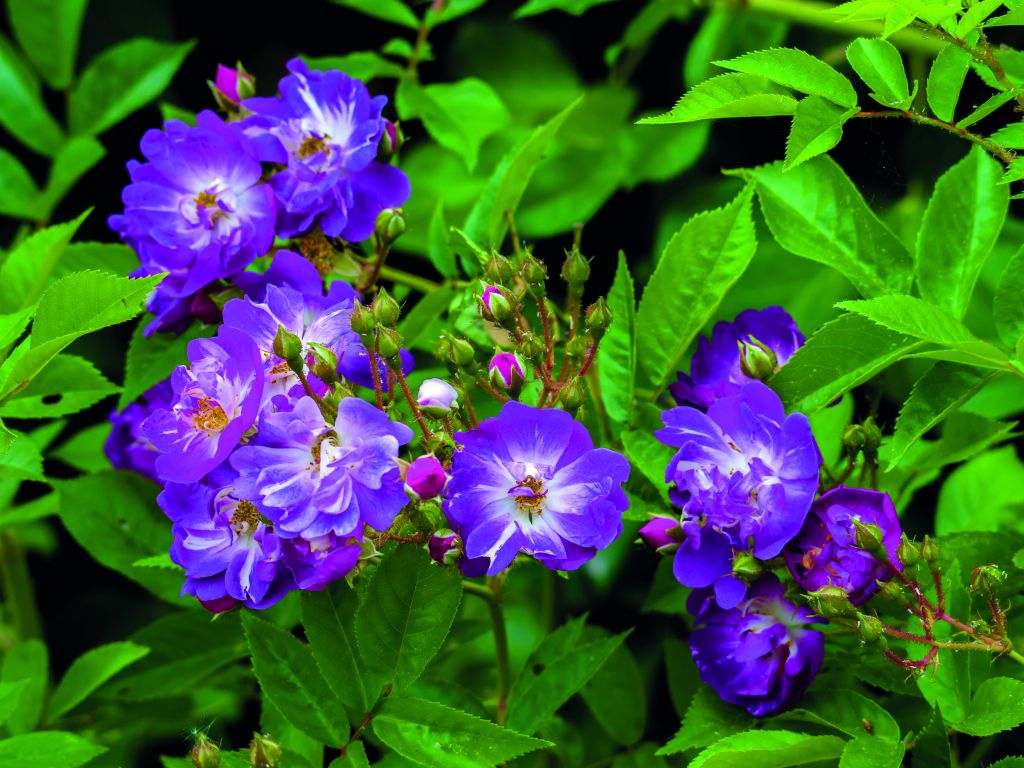
No discussion of classic ramblers would be complete without Veilchenblau, a truly distinctive rose whose small blooms open purple and fade to smoky lilac-blue tones. Almost thornless and exceptionally graceful, it possesses a mysterious beauty unlike any other rambler. In shaded conditions its colouring becomes even richer and more atmospheric.
For smaller gardens, The Garland remains a charming choice. Introduced in the nineteenth century, it bears clusters of creamy white flowers with a delightful fragrance and has a softer, more manageable habit than some larger ramblers.
Rambling roses also teach gardeners patience and trust. In their early years they may seem unruly or sparse, but with time they settle into their role, producing ever more spectacular displays. Unlike instant landscaping solutions, they reward long-term care and vision. A mature rambler is often at its finest after many years, becoming an integral part of the landscape rather than simply an ornamental feature.
Perhaps this is why they inspire such affection. Rambling roses remind us that gardens are living, evolving places rather than static designs. They encourage a gentler style of gardening — one that embraces looseness, abundance, and seasonal rhythm. In an increasingly controlled and hurried world, their carefree profusion feels deeply restorative.
To stand beneath a flowering rambler on a warm June evening, with petals drifting softly in the air and fragrance lingering in the dusk, is to experience one of gardening’s purest pleasures. They connect us not only with beauty but with memory, literature, and the enduring romance of the garden itself. Among all roses, ramblers remain the most generous, atmospheric, and soul-stirring of them all.